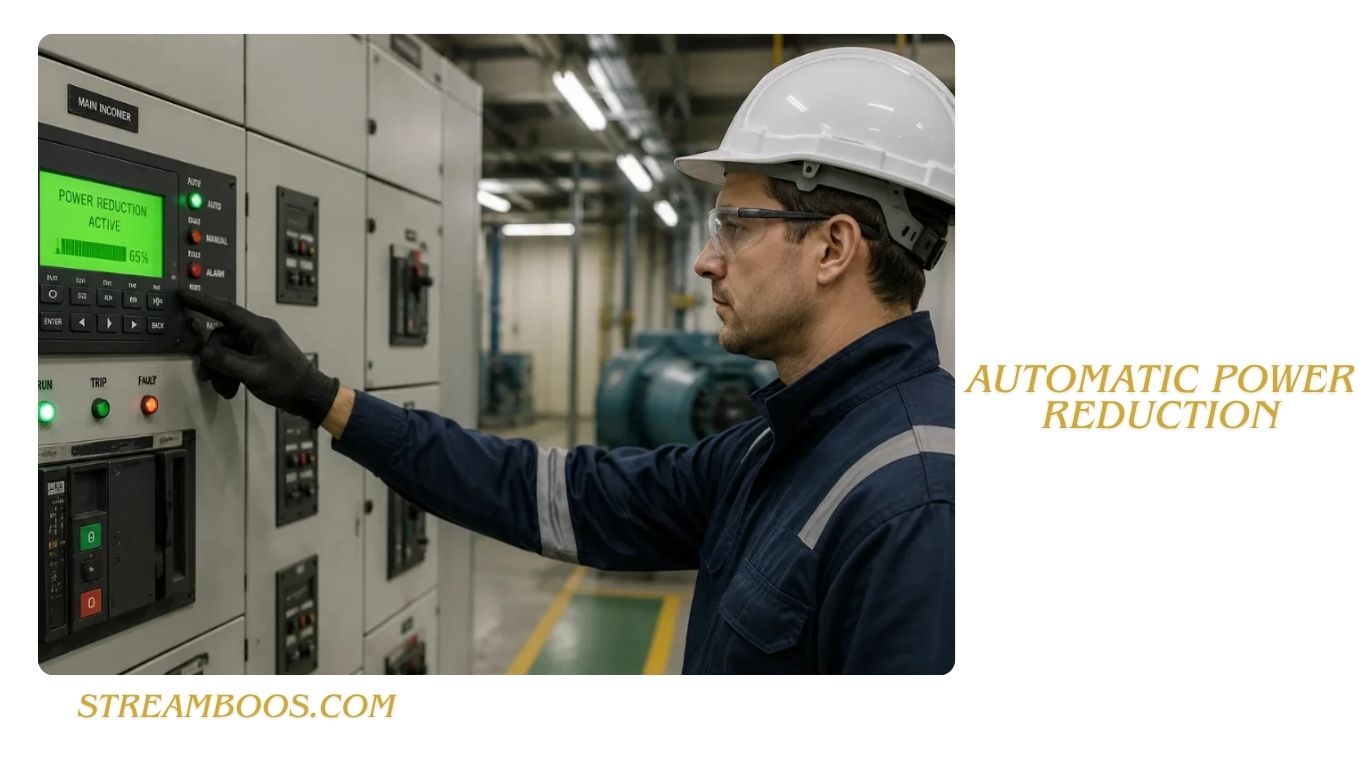
Automatic Power Reduction: Complete Guide to APR in Optical Systems
Automatic Power Reduction, commonly called APR, is an important safety feature used in high-power optical communication equipment. It is especially relevant to systems that use Erbium-Doped Fiber Amplifiers (EDFAs), optical amplifiers, and high-capacity fiber networks.
In a normal fiber optic system, optical power travels inside the fiber. When the fiber is cut, disconnected, or experiences a serious fault, high optical power may become accessible at an exposed fiber end. Automatic Power Reduction is designed to respond to certain fault conditions by reducing optical output to a safer level.
APR is mainly a safety mechanism rather than a performance feature. It helps protect technicians, network operators, and equipment when a high-power optical path is interrupted.
For anyone researching automatic power reduction, understanding how it works, why it is used, and how it relates to optical amplifiers is important. The following sections explain APR in simple terms while also covering its role in modern fiber optic networks.
What Is Automatic Power Reduction?
Automatic Power Reduction is a safety mechanism that automatically lowers optical output when an optical system detects a condition that may create a safety risk.
High-power optical equipment can transmit significantly more optical energy than basic fiber optic communication devices. Under normal conditions, this energy remains inside the fiber and travels between network components.
A problem occurs when the fiber path is interrupted. For example, a fiber cable could be accidentally cut during construction, or a technician could disconnect an active optical connector during maintenance.
Without a suitable protection mechanism, the equipment could continue transmitting at its normal power level.
APR is designed to prevent this situation from continuing.
When the equipment identifies a defined fault condition, it can reduce its optical output. Depending on the product, the system may reduce the power to a low level, enter a protected operating state, or work together with an automatic laser shutdown function.
The exact behavior depends on the manufacturer and equipment model.

Why Is Automatic Power Reduction Important?
Automatic power reduction is important because high-power optical signals can create safety risks.
Many fiber communication systems operate using infrared wavelengths that cannot be seen by the human eye. A person therefore cannot rely on visible brightness as a warning that optical energy is present.
This is especially important when working with optical amplifiers.
An EDFA can increase the power of optical signals so that they can travel over long distances. The increased power improves network performance, but it also increases the importance of proper optical safety.
APR provides an automatic response when the system detects a relevant abnormal condition.
Its benefits include:
- Reducing accessible optical power during certain faults
- Supporting technician safety
- Helping protect optical equipment
- Providing controlled fault behavior
- Supporting safer network recovery
- Reducing dependence on immediate manual intervention
APR should not be viewed as a replacement for proper fiber safety procedures. It is an additional layer of protection within the optical system.
How Does Automatic Power Reduction Work?
Automatic power reduction normally depends on monitoring conditions within an optical network.
The exact design varies, but the general process is relatively simple.
Also Read:Client Relationship Partner: Role, Skills, Responsibilities & Career Guide
First, the optical amplifier or transmitter operates normally. Optical power travels through the connected fiber.
The equipment monitors relevant conditions. These may include received optical power, loss of signal, loss of communication, or other system-specific information.
If a fault occurs, the equipment may recognize that the normal optical path has been interrupted.
For example, suppose an optical amplifier is sending a signal through a fiber span. If the fiber is cut, the receiving side may suddenly lose the expected optical signal.
The equipment can detect this condition and activate its protective response.
The optical output is then reduced according to the equipment’s safety design.
Some systems may use a low-power optical signal during recovery. Other systems may completely shut down the laser until the fault has been resolved.
This means APR is not one universal process. Different optical platforms can implement the function differently.
Automatic Power Reduction in EDFA Systems
Automatic Power Reduction is particularly important in Erbium-Doped Fiber Amplifier systems.
An EDFA is an optical amplifier that increases the strength of optical signals without converting them into electrical signals first.
EDFAs are widely associated with long-distance optical communication because they can amplify signals efficiently over fiber networks.
They can be used in:
- Long-haul networks
- DWDM systems
- Metro optical networks
- Telecommunications infrastructure
- Fiber backbones
- High-capacity optical transport
- Data center interconnections
The advantage of an EDFA is its ability to increase optical power.
However, that advantage also creates a safety consideration.
If a fiber connected to a high-power EDFA is disconnected, the exposed fiber end may carry optical energy that requires careful handling.
APR can respond to certain conditions by reducing the amplifier’s output.
This helps create a safer operating state while the network fault is investigated.
What Happens When a Fiber Is Cut?
A fiber cut is one of the clearest examples of why automatic power reduction exists.
Consider a fiber link connecting two optical network locations.
Under normal operation, the transmitting equipment sends optical signals through the fiber. The receiving equipment detects those signals and the network operates normally.
If the fiber is suddenly cut, the receiving equipment may detect a loss of signal.
Depending on the system architecture, that loss can cause the optical amplifier to enter a protective state.
APR may reduce the optical output or work together with automatic laser shutdown.
The exact response depends on the equipment.
Some systems can then monitor the network for recovery. When the fiber is repaired and the required conditions return to normal, the equipment may gradually restore normal operation.
Other systems may require manual intervention.
For this reason, technicians should always understand the recovery behavior of the specific optical platform they are maintaining.
Automatic Power Reduction vs Automatic Power Control
Automatic Power Reduction and Automatic Power Control sound similar, but they serve different purposes.
Automatic Power Control, often called APC, generally regulates optical output during normal operation. Its purpose can be to maintain a desired power level or stabilize the operation of a laser or optical amplifier.
Automatic Power Reduction has a different main purpose.
APR is associated with safety and fault conditions.
A simple comparison is:
| Feature | Automatic Power Reduction | Automatic Power Control |
| Main purpose | Safety | Normal power regulation |
| Typical trigger | Fault or abnormal condition | Operating condition |
| Main response | Reduce optical output | Adjust output to a target |
| Primary goal | Limit accessible optical energy | Maintain stable operation |
| Typical context | Optical safety | Laser or amplifier control |
Both functions can exist within the same optical equipment.
APC helps control normal operation, while APR provides an additional response when a potentially unsafe condition is detected.
Automatic Power Reduction and Automatic Laser Shutdown
Automatic Power Reduction is also closely related to Automatic Laser Shutdown, often abbreviated as ALS.
The main difference is the response.
APR generally means that optical output is reduced.
Automatic laser shutdown generally means that the laser output is shut down.
However, manufacturers can combine these functions in different ways.
For example, an optical system might first reduce power under one condition and completely shut down the laser under another condition.
A system may also use low-power signaling during recovery.
This means users should not assume that every APR system operates identically.
The equipment manual should explain:
- What activates APR
- What power level remains
- Whether the laser shuts down
- How alarms are generated
- Whether the system restarts automatically
- What conditions are required for recovery
Understanding these details is important for both safety and troubleshooting.
What Can Trigger Automatic Power Reduction?
Different optical systems use different APR trigger conditions.
Common conditions can include a sudden loss of optical signal, a fiber interruption, a disconnected optical path, or loss of communication between network components.
Possible triggers include:
Fiber Break
A physical break can interrupt the optical path and cause the receiving equipment to lose the expected signal.
Disconnected Fiber
Removing an active optical connection can create a condition that the equipment recognizes as a fault.
Loss of Signal
A significant loss of the expected optical signal can activate protective logic on some systems.
Supervisory Communication Failure
Some optical transport systems use supervisory communication to coordinate network components. Losing this communication may affect the protection response.
Equipment Fault
A failure in an optical module, amplifier, receiver, or related component can also create conditions associated with APR.
The exact trigger levels and logic are product-specific.
Automatic Power Reduction and DWDM Networks
Dense Wavelength Division Multiplexing, or DWDM, is an important environment for automatic power reduction.
DWDM allows multiple optical wavelengths to travel through the same fiber.
This makes it possible to carry large amounts of information over existing fiber infrastructure.
A DWDM system can include:
Also Read:GDTJ45 Builder: Complete Guide to the Mysterious Development Platform
- Optical transmitters
- Multiplexers
- Demultiplexers
- EDFAs
- Optical supervisory channels
- Fiber spans
- Optical monitoring equipment
- Network management systems
Because multiple channels can share one fiber and optical amplifiers may increase the combined power, safety becomes especially important.
If a fiber is damaged, the network may need to respond quickly.
APR can help place amplifiers into a safer state when the system identifies the appropriate fault condition.
This also illustrates why optical safety can involve several network elements instead of a single device.
Automatic Power Reduction and Optical Safety
Optical safety is one of the main reasons APR exists.
Fiber optic communication commonly uses wavelengths that are invisible to humans. A person may therefore not know that an exposed connector is carrying optical power simply by looking at it.
High-power optical systems require additional care because their output can be much greater than that of low-power communication equipment.
Safe practices include:
- Following manufacturer instructions
- Understanding the laser classification
- Using appropriate protective procedures
- Never looking directly into active fiber ends
- Using suitable optical test equipment
- Following approved maintenance procedures
- Training technicians before they work with high-power systems
APR supports these practices by providing an automatic response to certain faults.
However, it does not eliminate the need for human safety procedures.
APR Alarms and Troubleshooting
When automatic power reduction activates, the network management system may display an alarm.
The alarm name varies by manufacturer.
It could mention:
- Automatic power reduction
- Loss of signal
- Loss of input
- Amplifier shutdown
- Laser shutdown
- Optical fault
- Low optical power
- Supervisory channel failure
An APR alarm does not automatically mean that the amplifier itself is defective.
The amplifier may be responding correctly to another problem.
For example, a damaged fiber or dirty connector may cause a significant signal loss. The amplifier could then enter its protective state.
A good troubleshooting process starts by checking the alarm history and identifying what happened immediately before APR activated.
Technicians can then inspect the appropriate fiber path, optical levels, connectors, and related equipment using approved procedures.
Common Causes of Unexpected APR Activation
An APR event can have several causes.
A fiber cut is only one possibility.
Dirty connectors are a common source of optical loss. If contamination creates excessive attenuation, the receiver may see a much weaker signal than expected.
Incorrect fiber patching can also interrupt the intended optical path.
Damaged patch cords may produce unstable or reduced optical performance.
Excessive fiber bending can introduce additional loss.
Optical transceiver failures, amplifier problems, receiver failures, or supervisory communication problems can also create unexpected conditions.
Configuration issues may contribute in some systems.
The best approach is to treat APR as a symptom that requires investigation rather than immediately assuming that the amplifier has failed.
Automatic Power Reduction Best Practices
Organizations operating high-power optical networks should use APR as part of a larger safety program.
First, technicians should understand the equipment’s optical safety classification and manufacturer warnings.
Second, maintenance procedures should define how optical connections are handled.
Third, technicians should use appropriate test instruments when measuring optical power.
Fourth, connectors should be inspected and cleaned according to approved procedures.
Fifth, network operators should understand what happens when APR activates.
They should know whether the system:
- Automatically reduces power
- Shuts down the laser
- Sends an alarm
- Attempts recovery
- Requires manual intervention
- Restores full power automatically
Finally, safety functions should be tested according to the manufacturer’s instructions.
Improvised testing on a live high-power optical system can create unnecessary risk.
Automatic Power Reduction Standards and U.S. Safety
Automatic power reduction should be considered within the larger field of laser and optical communication safety.
The IEC 60825 series is an important international reference for laser safety. IEC 60825-1 addresses laser product classification and related safety requirements, while IEC 60825-2 focuses specifically on the safety of optical fiber communication systems.
ITU-T recommendations also address optical safety techniques used in telecommunications.
For U.S. organizations, applicable workplace and product safety requirements may also need to be considered.
The exact requirements depend on the equipment, workplace, application, and regulatory situation.
A general article cannot determine whether a specific product or installation is compliant.
For compliance decisions, organizations should consult current manufacturer documentation, applicable U.S. requirements, and qualified safety or compliance professionals where appropriate.
Automatic Power Reduction Maintenance and Testing
APR is a safety feature, so it should be included in appropriate maintenance and testing programs.
Testing should follow the manufacturer’s documented procedure.
A proper test may verify whether:
- The expected fault condition is detected
- Optical power is reduced correctly
- The expected alarm appears
- The system enters the correct protective state
- Recovery works as designed
- Normal operation returns under the correct conditions
Testing should be planned carefully.
Technicians should not simply disconnect a live high-power fiber without understanding the equipment’s safety procedures.
The objective is to verify the protection system while keeping personnel and equipment safe.
Maintenance records can also help organizations identify recurring APR events.
If a particular optical link repeatedly activates APR, the history may reveal an ongoing problem with connectors, fiber attenuation, equipment, or configuration.
Benefits and Limitations of Automatic Power Reduction
Automatic power reduction offers several important advantages.
The biggest benefit is improved safety during defined abnormal conditions.
It can also reduce the amount of optical energy available at a fault location.
APR can provide faster automatic responses than manual intervention.
It can support controlled recovery and help network operators understand the state of an optical system.
However, APR also has limitations.
Also Read:Bodenxt: Complete Guide to Boden’s Green Industrial Future
Its effectiveness depends on the system’s detection method and design.
It may not detect every possible physical problem.
Different manufacturers may use different thresholds and recovery processes.
A safety function can also experience equipment or configuration problems.
For these reasons, APR should always be treated as one layer in a complete safety system.
It should work alongside training, maintenance procedures, equipment classification, monitoring, and safe fiber-handling practices.
Frequently Asked Questions About Automatic Power Reduction
Is automatic power reduction used only in telecommunications?
No. APR-related safety concepts can be relevant to different high-power optical applications. However, it is particularly important in telecommunications and optical transport systems that use high-power amplifiers such as EDFAs.
Can automatic power reduction protect a technician from every optical hazard?
No. APR only responds to the conditions that the equipment is designed to detect. Technicians must still follow appropriate optical and laser safety procedures whenever they work around fiber optic equipment.
Does a fiber need to be completely cut for APR to activate?
No. A complete fiber cut is not necessarily required. Depending on the equipment, a significant loss of optical signal or another abnormal condition may be enough to trigger the protective function.
Can APR activation cause a network outage?
Yes. If APR responds to a serious fiber or equipment fault, the associated optical link may lose service while the system is in its protective state. This is an intentional safety response, not necessarily evidence that APR itself is malfunctioning.
Should APR be tested during routine maintenance?
It may be appropriate to test APR as part of a planned maintenance program, but testing should only be performed using the manufacturer’s approved procedure and appropriate safety controls. High-power optical equipment should never be tested through improvised procedures.
Conclusion
Automatic Power Reduction is an important safety mechanism for high-power optical communication systems.
Its main purpose is to reduce optical output when equipment detects a condition that could make high optical power accessible. This is particularly relevant to Erbium-Doped Fiber Amplifiers, DWDM systems, and other high-power optical transport platforms.
APR should not be confused with Automatic Power Control. APC generally manages normal optical output, while APR is primarily associated with safety and abnormal conditions. APR can also work alongside Automatic Laser Shutdown and other protective technologies.
For network engineers and technicians, the most important lesson is that APR is one part of a larger optical safety strategy. Proper training, fiber-handling procedures, equipment documentation, optical testing, and compliance with applicable safety requirements remain essential.
Understanding automatic power reduction helps network professionals troubleshoot optical faults more effectively while also recognizing why high-power fiber systems require careful and disciplined maintenance.